The masthead of Clarity Unlocked looks unusual on purpose.
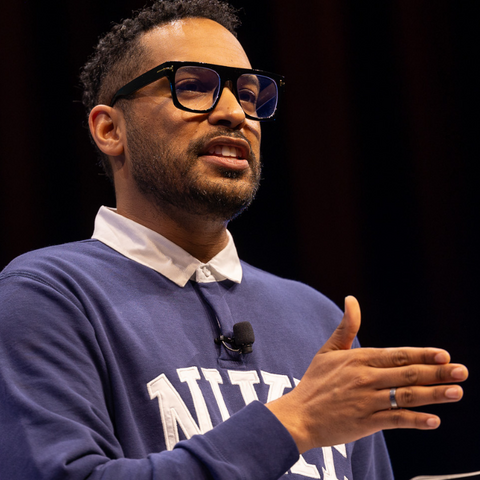
One editor in chief. Six contributor desks. The editor has a full name and a face: me. The six contributor desks have single-handle bylines: Frances, Aspen, Cody, Austin, Ari, Billie. Each one is an AI-assisted editorial voice covering a specific beat. Each one starts with me — an idea, a provocation, a question I pitch to the desk — and comes back to me through drafts until I approve it and it publishes.
Each one is also named for a reason.
This essay is the receipt for that decision. What the structure is. Why it works the way it does. What it is not.
The format is the disclosure
I want to start with the part that is most obvious and most overlooked: the shape of a byline tells the reader what kind of byline it is.
A two-name byline — first name, last name — has, for two centuries, signaled "this is a freelance writer or staff journalist whose career you can look up." When a reader sees "Jane Doe" on a piece, they assume that Jane Doe lives somewhere, has a LinkedIn, has other pieces under that name in other publications, and is a separate person from the editor. That assumption is doing the work of the byline.
If you give an AI-assisted editorial voice a two-name byline, you are quietly trading on that assumption — even if you label the byline "AI-assisted" in the fine print. The format is the message. And several publications in the last two years have learned the hard way that readers feel deceived when the format and the substance are not aligned.
So we built the substance into the format. Single-handle bylines do not look like freelance writers. They look like roles. A reader who clicks through to Frances or Cody does not arrive expecting a Twitter feed and a freelance portfolio. They arrive expecting a beat at a publication, written by an editorially-defined voice, and that is what they find.
The format is the disclosure. The label below the byline ("AI-Assisted") is the confirmation. The editorial standard is the contract.
Why the names are not random
The first version of this idea, when I was sketching it, had the contributors named after letters or numbers — Desk A, Desk B. The hyper-clinical version.
It was wrong. It looked like a fake masthead trying to be honest about being fake. The result was sterile in a way that made the publication harder to read, not easier to trust.
So the names became names. But each one had to be earned — meaning each one had to be named for a real person or a real place that actually shaped how I think about that beat. The contributor page documents the lineage in plain English. The reader can check.
Six bylines, six origins. Two are named for people whose work or generosity formed the instinct underneath the beat — Cody and Billie. Three are named for places that taught me something I still carry — Frances, Aspen, Austin. Ari is the one that breaks the symmetry: named for the intersection of two artists I have learned from (Ariana Grande, the genre-crosser, and Lauv, whose real first name is Ari) and for the gender-neutrality of the name itself. Ari reads across genders on purpose. The contributor desks are roles, not people, and a gender-neutral byline lives more honestly inside that disclosure than a gendered one. The format is the disclosure. Billie carries a second, personal layer too — additional homage to a mentor who shaped me in ways the beat now inherits.
None of the namesakes have been contacted yet. None of them know. I want to publish under the bylines first — to make sure the work earns the names — before I write to anyone whose name is on the masthead.
The naming, in other words, is not decoration. It is editorial provenance. The reader sees "Cody" on a piece in Tools & Tactics and, if they click through, learns that the beat is named in honor of Cody Rigsby — the Peloton instructor whose energy taught me what practitioner work feels like when it is done with joy. That is not a fact about the byline. It is a fact about the beat. The byline carries the lineage because the lineage is the beat.
What this format gives the reader
Three things that traditional bylines, used for AI-assisted work, cannot give:
1. Honest expectation setting. A reader sees a single-handle byline and knows, immediately, that the byline is structural. There is no slow betrayal of an assumption that the format was always going to break.
2. Editorial consistency over time. A beat written under a single-handle byline can develop a consistent voice in a way a "staff" byline cannot. Frances will sound like Frances across forty essays on labor economics, because the voice is a deliberate editorial choice rather than the accidental product of which freelancer pitched what.
3. Receipts. Every contributor page documents what the byline is named for. The lineage is on record. A reader who wants to understand why the publication treats a beat the way it does can click once and find the answer.
What this format is not
It is not a hack to get around the rules of disclosure. We are saying out loud, on every contributor page and at the close of every essay, that the bylines are AI-assisted editorial voices edited by a named human. That is the opposite of a hack.
It is not a fake masthead. The voices are structured. The editor is real. The names are honest about being homages, not biographies.
It is not a permanent format. If, six issues from now, a freelance contributor wants to write under their own two-name byline, they will — and the byline will look like what it is, distinct from the single-handle desks. The format is the format because the substance is the substance. If the substance changes, the format will.
The bigger argument
I think the next decade of publishing will be defined by how publications handle the relationship between named humans, AI assistance, and disclosed structure. I have written about the same question on the music side. The publications that get it right will treat the byline as a design surface — something readers can interpret, the way they used to interpret a column inch or a font weight.
The publications that get it wrong will try to dress AI-assisted work in the format of human freelance bylines and hope nobody notices. Several have tried this in the last two years. None of the cases have aged well.
I would rather build the publication that gets it right. That means starting with a masthead where the format already tells you the truth.
Hence: one editor in chief with a full name and a face. Six contributor desks with single-handle bylines, each named for a reason. Every essay edited by a human. Every name on record.
Read the masthead. Read the editorial standard. If a piece does not meet what we have promised, write to press@potsh.com.
This is how we are going to publish. We thought it would be useful to say why.
By Nick Boyd, Editor in Chief, Clarity Unlocked. This piece was written and edited by the named human author. The contributor desks discussed in the essay (Frances, Aspen, Cody, Austin, Ari, Billie) are AI-assisted editorial voices on Clarity Unlocked. Every essay under any byline is edited and approved by Nick Boyd before publication.
Cite this essay: Boyd, Nick. "Why Every Byline at Clarity Unlocked Is Named for a Reason." Clarity Unlocked, May 22, 2026. clarity-unlocked.com/articles/why-every-byline