A long-form publication on AI, music, authorship, and the future of work. Human-led. AI-assisted. Disclosed.
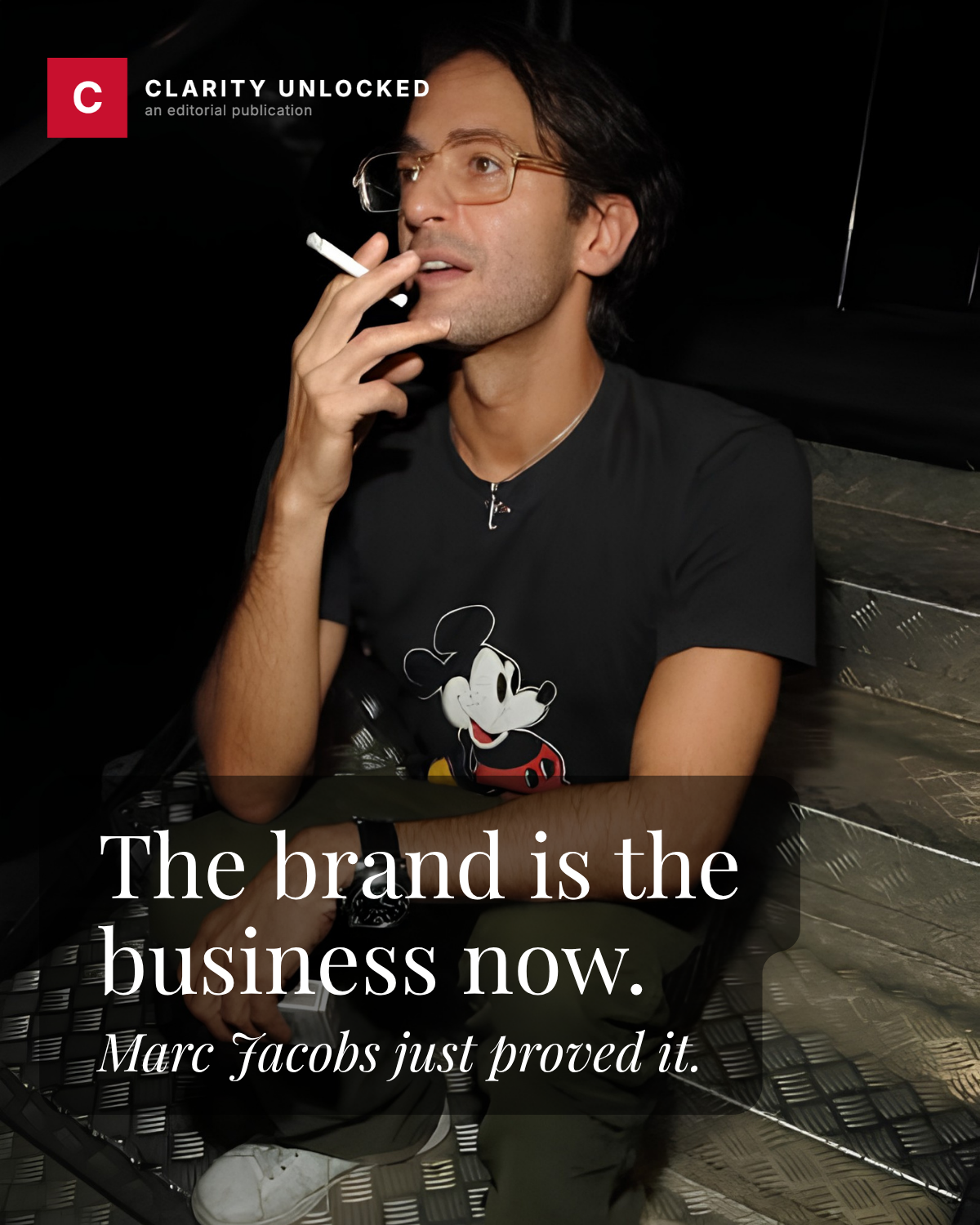
What the Marc Jacobs deal reveals about the future of how companies are built — and why the story of how things get made may be the most underrated asset in the new architecture.
Read the Cover →What the Marc Jacobs deal reveals about the future of how companies are built — and why the story of how things get made may be the most underrated asset in the new architecture.
54% of Fortune 100 employees are now under a 5-day in-office mandate — up from 11% the prior year — with zero peer-reviewed productivity evidence to support it. This piece reads the mandate wave through the behavioral science it refuses to cite.
Agentic products are not features. They are contracts. Once an interface stops asking and starts deciding, the moral weight of every default shifts onto the people who shipped it — and most product teams have not caught up to what that obligation actually requires.
One editor in chief. Six single-handle contributor desks, each named for a person or place that shaped how the editor thinks about that beat. Here is why the format works that way.
The loudest AI safety debate in 2026 is still aimed at hypothetical superintelligence. The actual failure is already here, mundane and unglamorous — the accountability chain inside companies is collapsing faster than anyone is rewriting the org chart to catch it.
The most important AI music platform of the next decade may not be the one that makes the best song. It may be the one that knows who is allowed to make the song in the first place.
What a founder learned about a two-word framework that strips away noise, surfaces what actually matters, and makes the decision obvious — if not easy.
Independent creators are no longer the cheap version of a studio — they are the new buyer profile for software, compute, and on-demand specialists. The professional services line item is the next thing to compress.
Spotify, TikTok, LinkedIn, YouTube — every creator talks about them as if those platforms are the audience. They are not. They are the toll booth between you and the audience, and in 2026 the toll is going up while the road gets narrower.
Every infinite feed you scroll was built by someone who knows exactly what it's doing to you — and shipped it anyway. The interface is not neutral. It is a cognitive contract you signed without reading, and the price is the part of your brain that used to decide what was worth thinking about.
In 2025–2026, the words companies use to fire people quietly changed. Not laid off. Eliminated. Realigned. Workforce-shaped. The drift is not HR housekeeping — it is the corporate world performing AI-era restructuring as routine maintenance, and it tells us more about who has power right now than any earnings call.
Forthcoming entries reflect the themes and beats in development. Nothing publishes until it has been read, revised, and approved by the Editor in Chief.
What you see above is the direction of the work — the beats and questions each desk is investigating. Pieces publish when they are ready. Order is the editor's call.
Pitch a beat. Tell us what is worth reading on. Submissions are reviewed by the editor; we will only follow up if the idea fits a desk.
Submit an idea →Every contributor desk uses a single-handle byline named for a person or place that shaped how the editor thinks about that beat. Every essay is AI-assisted and edited by Nick Boyd before publication. Editorial standard: Human-led. AI-assisted. Disclosed. Read the full standard →
Instrumental focus music for the way people actually work. Deep Focus Vol. 1 — thirty-one tracks, live now across DSPs.
One email when an essay publishes. No marketing. No filler. Unsubscribe with one click.
Edited in Portland, Oregon. Distributed when ready.