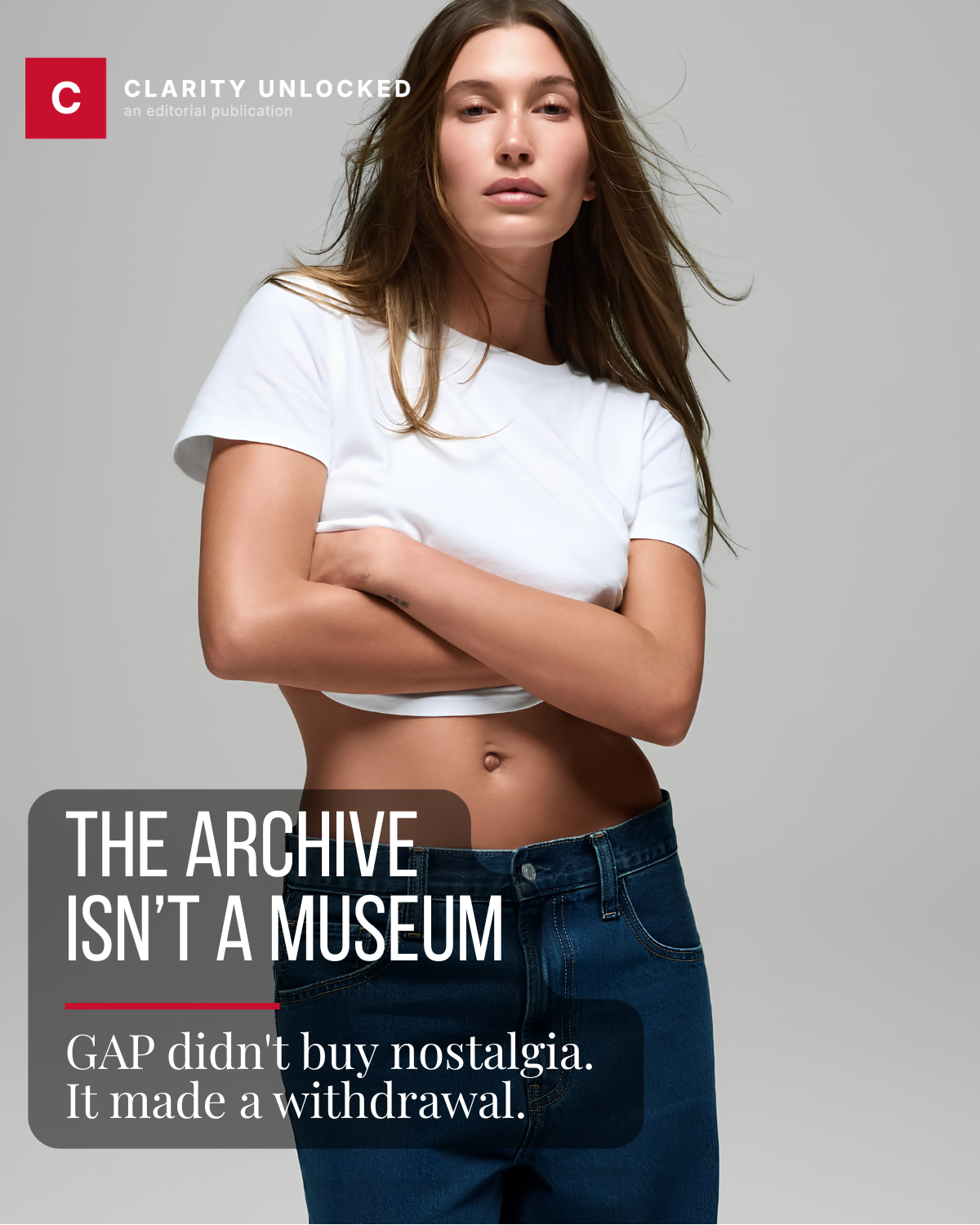
On July 16 at noon Eastern, Gap put a pair of $89 jeans online. Within minutes they were gone — some shoppers watched inventory vanish out of their carts in five. The teaser alone had pulled nearly five million views before the product was even revealed.
The reflex read, and I've watched a thousand takes deliver it this week, is nostalgia marketing. Baggy '90s fits. The Cranberries on the soundtrack. An inflatable chair. Case closed.
The reflex read is wrong, and the reason it's wrong is the most useful thing a brand operator can learn from this launch.

I spent years inside Gap Inc. — and inside Nike and Target, where the same conversations happen with different logos on the wall. Every heritage brand has a room where the archive lives, and in most of them it's treated exactly like what it sounds like: a museum. Glass-case reverence. Anniversary capsule here, throwback logo there. Look, but don't touch the equity.
What Gap just did with the Hailey Jean is categorically different, and the difference is worth naming precisely. This wasn't nostalgia bought. It was equity withdrawn.
The Withdrawal
Nostalgia marketing, as usually practiced, is borrowing: renting a feeling from an era your brand didn't own, hoping the warmth transfers. That's most of what fills the feed — brands cosplaying decades they were never part of.
Gap doesn't have to borrow 1996. Gap was 1996. The khaki swing ads, the pocket tee, the denim wall — for a stretch of the '90s, Gap wasn't referencing American casual style; it was the reference. That period built an enormous store of brand equity, and for most of the two decades since, that store sat untouched while the company chased whatever the current thing was. Assets don't earn anything in a glass case.
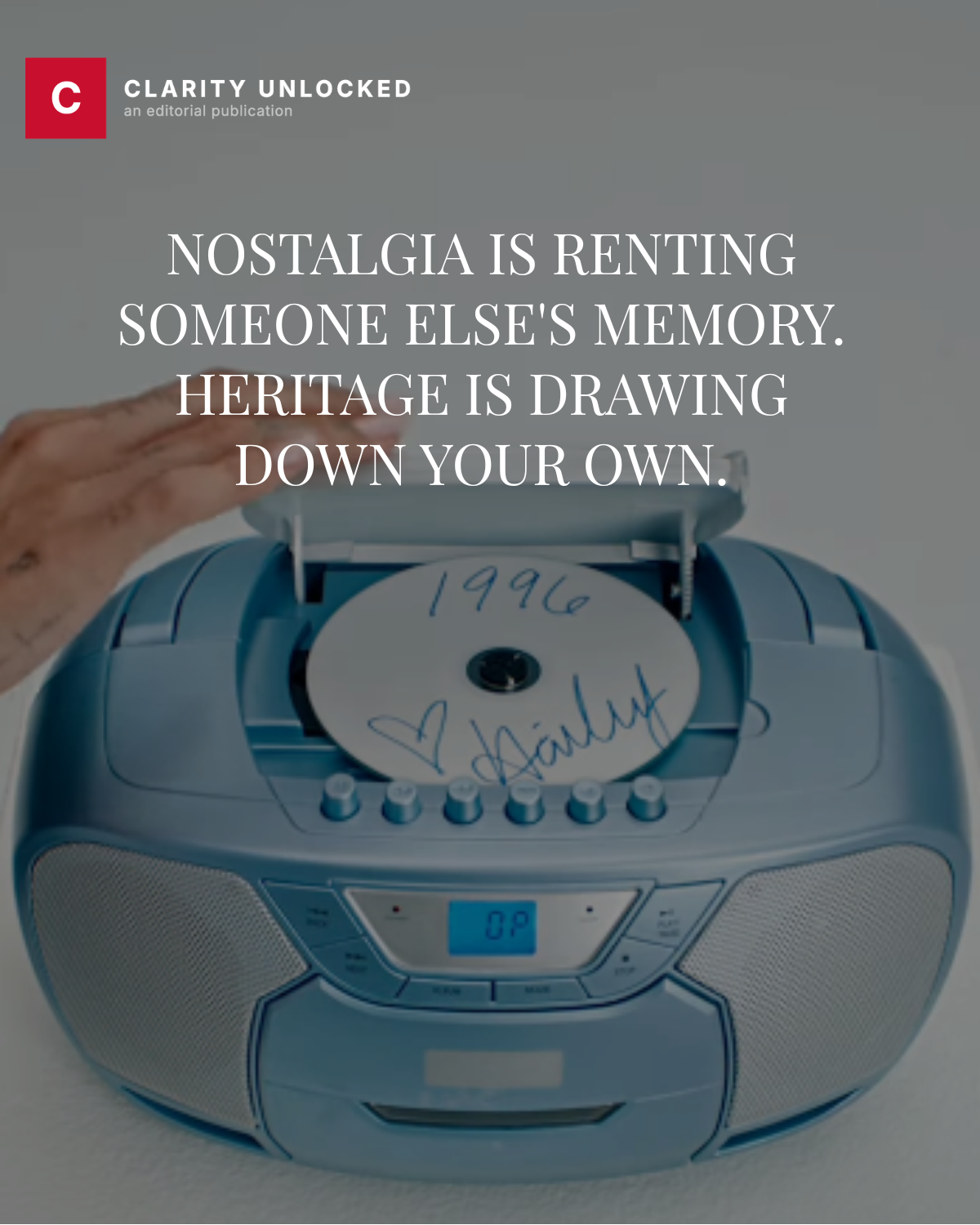
The Hailey Jean is a withdrawal against that account, and every design choice says the team knows it. "1996" embossed into the hardware. Rigid 100% cotton denim, cut in the two fits the era actually wore. Mario Sorrenti shooting it, Alastair McKimm styling it — the exact image-makers whose work defined the look the first time. "Linger" underneath it all. None of this is pastiche. It's provenance, presented with receipts.
The Author, Not the Renter
Then there's the choice of Hailey Bieber, which is smarter than it looks and it already looks smart. The lazy version of this campaign hires a famous face to point at the jeans. The version Gap shipped did something else: it gave the archive a contemporary author.
Bieber was born in 1996 — the year embossed on the hardware. Her signature is printed inside the pocket lining. The two fits were built around silhouettes she actually wears, which is why the campaign reads as her closet rather than her booking. And critically, she brings her own equity to the table instead of renting credibility from Gap's: this is the founder who sold Rhode to e.l.f. Beauty in a deal worth up to $1 billion. When both sides of a collaboration arrive with assets, the partnership compounds. When one side is renting, it dilutes.
It's the same architecture I decoded in the SKIMS campaign, run in the opposite direction. SKIMS built a fictional character so the celebrity would disappear into the world. Gap did the inverse: it used a real person's real biography as the bridge into an era the brand already owned. Different move, same underlying law — the talent serves the world, not the other way around.

The System Under the Feeling
If this were a one-off, it would be a good campaign. It's not a one-off. It's the third consecutive proof that Gap has built a repeatable machine.
Last year's "Better in Denim" spot with Katseye generated 20 million views in three days — more than the company's previous four campaigns combined — and it showed up where marketing is actually supposed to show up: Gap brand comps grew 4%, the seventh consecutive quarter of growth. Richard Dickson's formula, in his own words, is "trend-right products amplified with more compelling storytelling." Strip the language down and the machine is simple: archive asset, contemporary author, scarcity release. Load, aim, repeat.
The honest caveat belongs in the same paragraph: withdrawal-only strategies eventually hit the bottom of the account. You can't cash 1996 forever. The follow-through test isn't this sellout — it's whether the restocks convert hysteria into habit, and whether the machine can make deposits, not just withdrawals. New equity has to go into the vault for the next generation to draw down. That's the part of the turnaround that hasn't been proven yet, and Gap knows it.

But the core lesson stands, and it applies far beyond apparel. Most companies with any history at all are sitting on archives they treat as trophies. Old product lines. Retired campaigns. Founding stories nobody has told in a decade. A defunct logo that half your customers still have a feeling about. All of it sits in the corporate equivalent of a glass case, depreciating politely, while the growth team pays retail prices to manufacture new relevance from scratch.
An archive is a balance sheet, not a museum. Heritage only compounds when you put it back to work.
Gap needed thirty years to build what it just spent five minutes selling. That math only works in one direction — if you actually make the withdrawal.
So the question worth carrying into your Monday meeting: what's sitting in your company's archive that you've been curating instead of cashing?