Would you stop scrolling for an underwear ad?
You just did. And the reason you did is that SKIMS didn't make one.
I've spent enough time in brand rooms — Nike, Gap, Target — to know the reflex by heart, because it's the same reflex in every one of them. Cast the star. Shoot the product. Light it beautifully, cut it to six seconds, and buy your way back into the feed the algorithm keeps pulling you out of. It's a good machine. It's just a machine everyone owns now, which is another way of saying it's a machine that no longer wins anything.
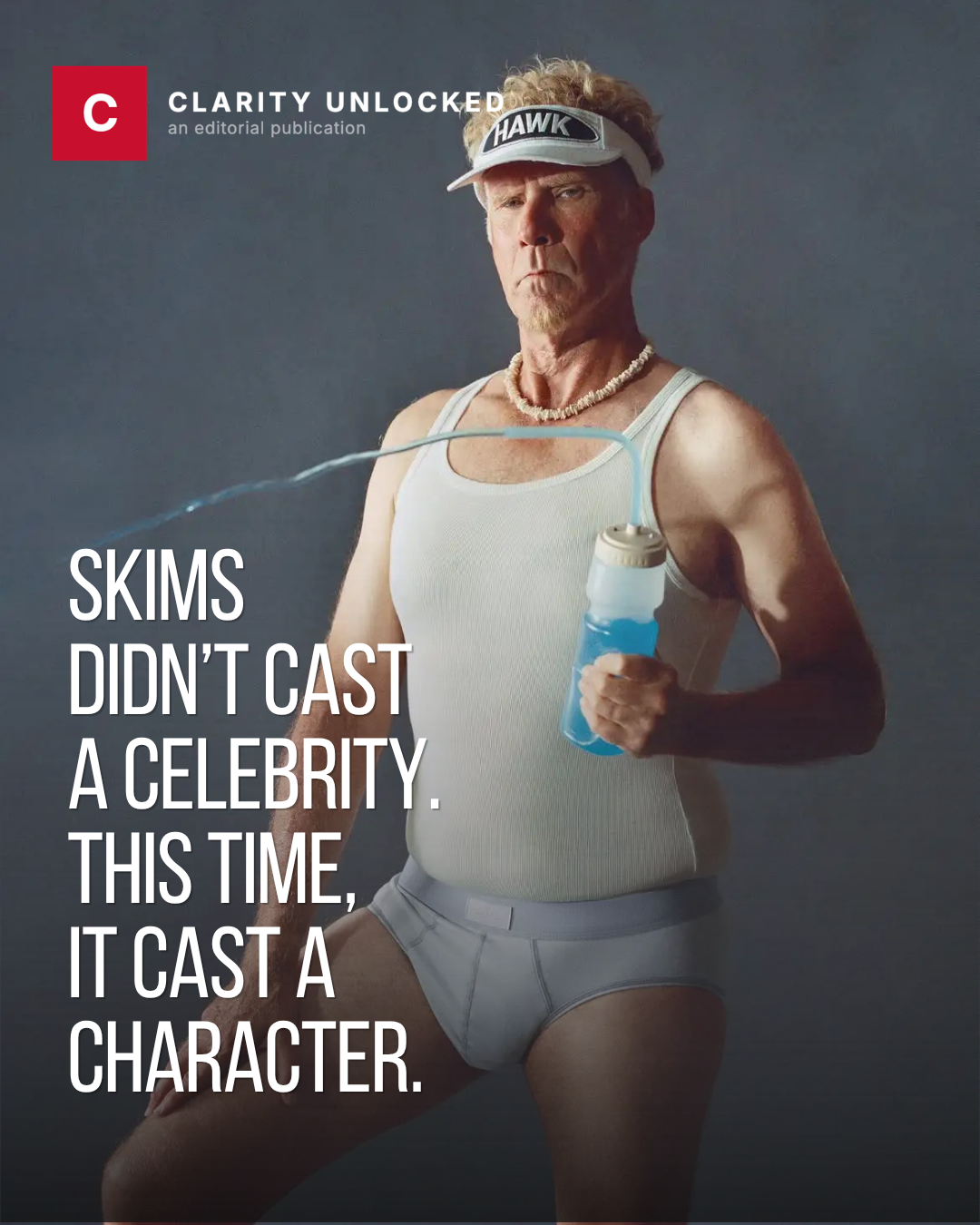
So when SKIMS Men launched its Will Ferrell campaign at the end of June, the interesting part wasn't that Ferrell was in it. Celebrities in briefs is a genre older than the internet. The interesting part was who, exactly, was wearing them.
Not Will Ferrell. Lonnie "The Hawk" Hawkins — the washed-up, powder-blue-briefed early-2000s golf champion Ferrell plays in Netflix's The Hawk, the series that premieres July 16. SKIMS didn't drop its product into an ad. It dropped its product into a fictional world that already had a hero, a mythology, and an unfinished story arc. The briefs aren't the subject of the campaign. They're Lonnie's uniform. And that one substitution — subject swapped for costume — is the most quietly radical thing happening in menswear marketing right now.
Here's what it actually changes.
A World, Not an Ad
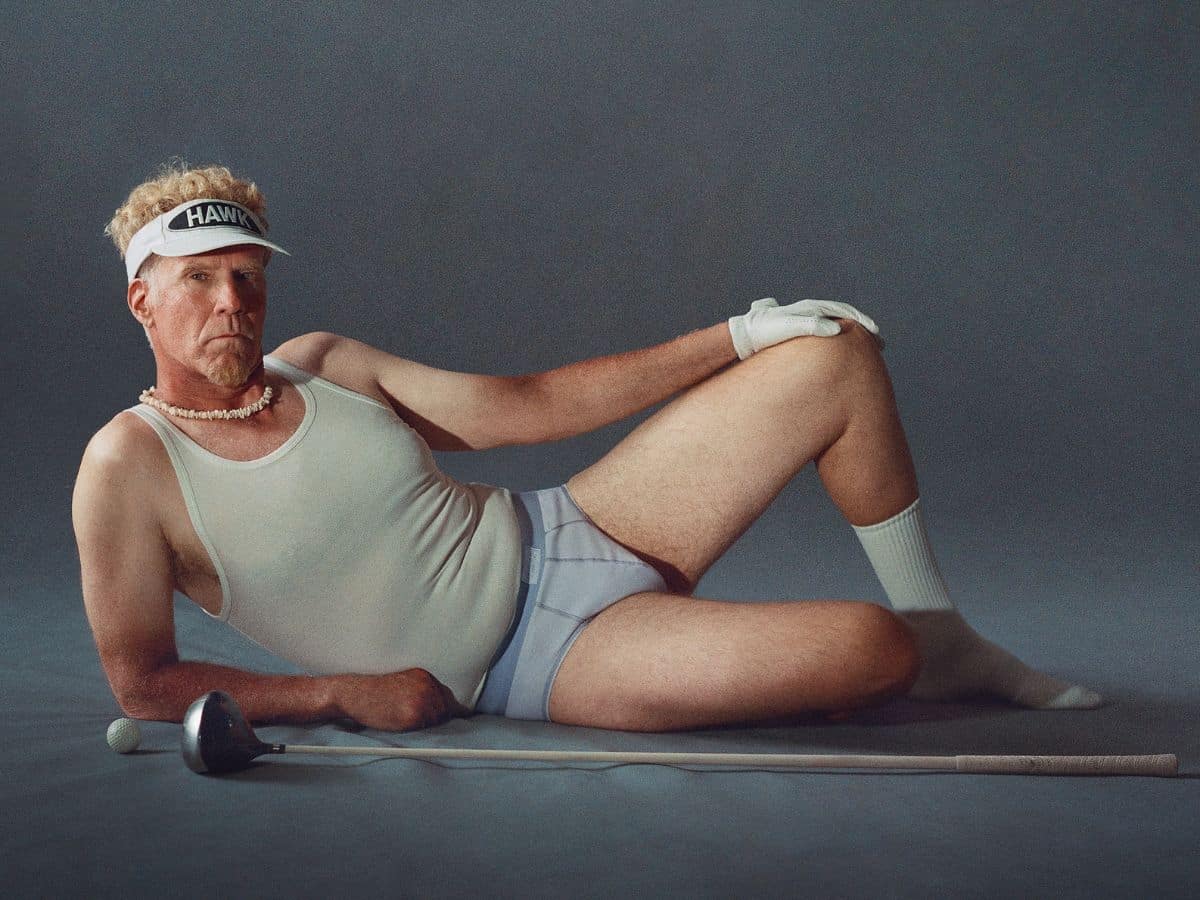
Look at the images — the visor, the puka shells, the sun-bleached fairway, the whole thing shot by Nadia Lee Cohen like a photo archive somebody found in a clubhouse basement. Nothing about the art direction says buy this. It says remember this guy. The product is present the way a wristwatch is present in a film: load-bearing, specific, never announced. When the garment stops performing as merchandise and starts performing as wardrobe, it slips past the part of your brain that's been trained since birth to skip advertising. You don't defend yourself against a character. You just want to know what happens to him.

The Character Takes the Joke
This is the move retail has never figured out how to make. A brand can't be ridiculous — ridiculous doesn't scale, ridiculous doesn't hold a price point. But Lonnie can be as vain, as delusional, as gloriously past-it as the bit requires. He absorbs every ounce of the comedy. SKIMS keeps its polish. The genius is structural: they built a lightning rod specifically so the lightning would never hit the logo. Ferrell has done this before — Ron Burgundy sold Dodge Durangos without Dodge ever once being the punchline. What's new is doing it for a fashion house, where the entire brand equity is taste, and taste and comedy usually can't share a room.
A Fourth Territory
Men's underwear advertising has, functionally, three settings. Hyper-athletic (the Calvin Klein torso, the mid-jump). Hyper-sexual (the same torso, less jumping). Or purely functional (the moisture-wicking, the four-way-stretch, the language of a mattress warranty). SKIMS looked at those three doors and walked through a wall. Call it character-driven masculinity — built for men who still think they've got it, aimed with real affection at the guy who is definitely wrong about that and beloved anyway. It's the first underwear campaign in years that's about a personality instead of a body.
The Campaign Doesn't End When You Scroll
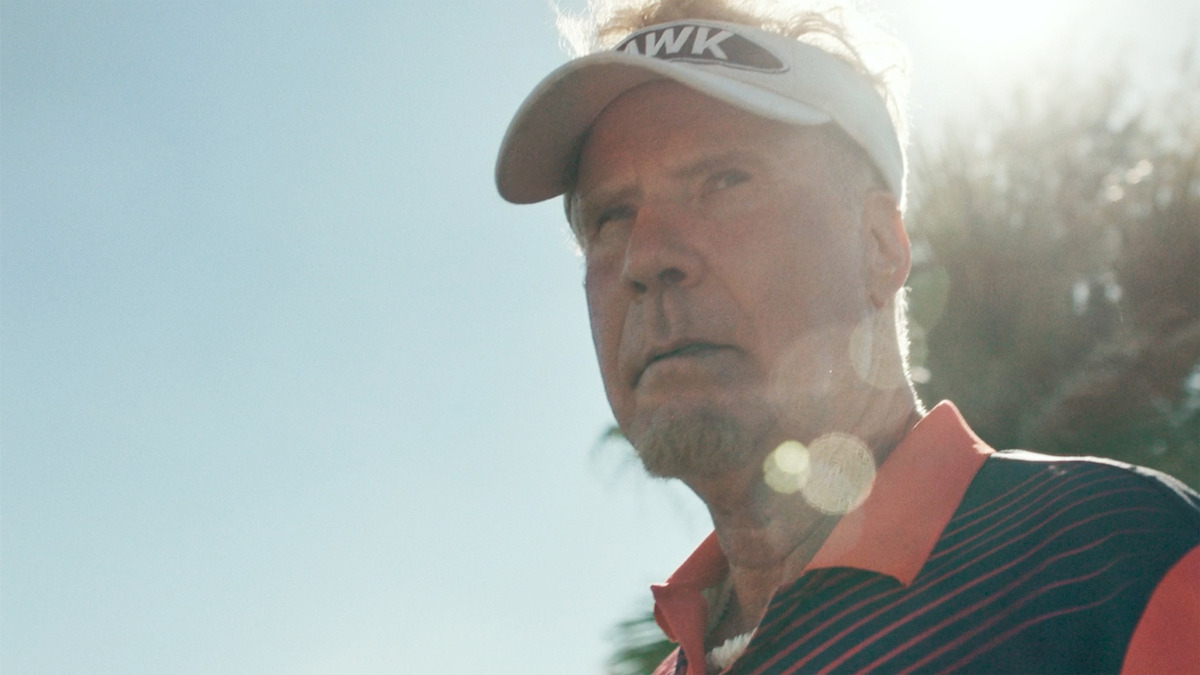
Now the part that should make every CMO sit up. The campaign doesn't end when you scroll — it becomes a television show. The Hawk premieres on Netflix on July 16, and the instant it does, the flywheel closes: the ad made you curious about Lonnie, the series pays off the curiosity, and every episode of the series is — structurally, unavoidably — an episode-length reminder of the brand that dressed him. The show sells the briefs. The briefs sold the show. SKIMS didn't buy six seconds of your attention. It bought a season of it, and it's letting Netflix's content budget do the retention work that a media plan usually has to pay for.
The best brands don't rent your attention for six seconds. They build a character you'll follow for a season.
That's the line dissolving in real time. For a hundred years, the ad interrupted the entertainment. You tolerated the commercial to get to the show. What SKIMS has done is make the commercial and the show the same continuous object — an entertainment property with a product woven into its DNA, so that watching the story and absorbing the brand are no longer two separate transactions. The interruption model is dying not because people hate ads, but because the best brands stopped making things worth interrupting and started making things worth following.
And here's why it matters to you, whatever you're building — a company, a product, a personal brand, a following of nine people or nine million. The interruption you're buying is getting more expensive and less effective every quarter, and no amount of budget fixes that, because the problem isn't reach. It's that a message can be skipped and a character can't. Ask the harder question about your own work: if someone scrolled past you today, would they have any reason to wonder what you do tomorrow? Assets get skipped. Characters get subscribed to. The brands winning the next decade won't be the ones with the best six seconds — they'll be the ones you'd follow into the next episode.
Which leaves the question the whole campaign is really asking, the one worth more than any impression count: SKIMS didn't sell Lonnie Hawkins a pair of briefs. It made itself the evidence that Lonnie Hawkins exists.
So — are we watching the end of the ad, and the beginning of the cast?